HEALTH
gingivitis vs periodontitis: Understanding the Key Differences, Symptoms, and Treatments

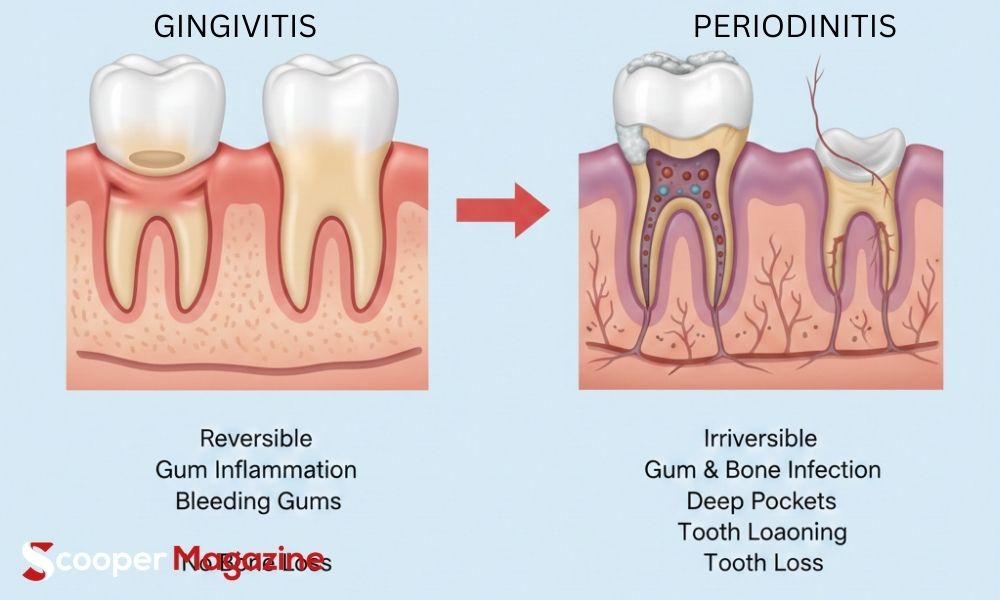

Understanding gingivitis vs periodontitis is essential for protecting your oral health. While both conditions affect the gums, they are not the same and knowing the difference can literally save your teeth.
In this SEO-optimized and human-friendly guide, we’ll cover:
-
What is gingivitis?
-
What is periodontitis?
-
Key differences between gingivitis vs periodontitis
-
Causes and risk factors
-
Symptoms to watch for
-
Stages of gum disease
-
Treatment options
-
Prevention tips
-
Frequently asked questions
Let’s break it down clearly and simply.
What Is Gingivitis?
Gingivitis is the earliest and mildest form of gum disease. It occurs when plaque — a sticky film of bacteria — builds up on teeth and irritates the gums.
Common signs of gingivitis include:
-
Red or swollen gums
-
Bleeding while brushing or flossing
-
Tender gum tissue
-
Mild bad breath
The good news? Gingivitis is reversible.
With proper oral hygiene and professional dental cleaning, gum tissue can return to a healthy state.
What Is Periodontitis?
Periodontitis is a more advanced and serious form of gum disease. It develops when untreated gingivitis progresses deeper into the gum and bone structures that support the teeth.
Unlike gingivitis, periodontitis can cause permanent damage.
Symptoms of periodontitis may include:
-
Persistent bad breath
-
Gum recession (gums pulling away from teeth)
-
Deep pockets between teeth and gums
-
Loose teeth
-
Pain while chewing
-
Bone loss
Periodontitis is not fully reversible, but it can be managed with professional treatment.
Gingivitis vs Periodontitis: The Key Differences
Understanding gingivitis vs periodontitis becomes easier when you compare them directly.
| Feature | Gingivitis | Periodontitis |
|---|---|---|
| Severity | Mild | Advanced |
| Reversible? | Yes | No (damage is permanent) |
| Bleeding Gums | Common | Common |
| Bone Loss | No | Yes |
| Gum Recession | Rare | Common |
| Tooth Loss Risk | Low | High |
| Treatment | Cleaning & hygiene | Deep cleaning, surgery possible |
The biggest difference in gingivitis vs periodontitis is tissue and bone damage.
Gingivitis affects only the gums.
Periodontitis affects gums, connective tissue, and bone.
What Causes Gingivitis and Periodontitis?
The primary cause of both conditions is plaque buildup.
When plaque is not removed:
-
It hardens into tartar (calculus).
-
Bacteria multiply.
-
The immune system responds with inflammation.
-
Tissue damage begins.
Other contributing risk factors include:
-
Poor oral hygiene
-
Smoking
-
Diabetes
-
Hormonal changes
-
Genetic predisposition
-
Stress
-
Certain medications
Ignoring early gum inflammation increases the risk of progression from gingivitis to periodontitis.
Symptoms: How to Tell the Difference
Many people search “gingivitis vs periodontitis symptoms” because early signs can look similar.
Signs You Likely Have Gingivitis
-
Bleeding when brushing
-
Puffy gums
-
Mild redness
-
No loose teeth
-
No deep gum pockets
Signs You May Have Periodontitis
-
Gums pulling away from teeth
-
Persistent bad breath
-
Teeth shifting position
-
Pus between gums and teeth
-
Pain when chewing
-
Noticeable tooth mobility
If symptoms go beyond mild bleeding, it’s important to consult a dentist.
Stages of Gum Disease
Gum disease typically progresses through stages:
1. Healthy Gums
Firm, pink tissue with no bleeding.
2. Gingivitis
Inflammation without bone damage.
3. Early Periodontitis
Minor bone loss begins.
4. Moderate Periodontitis
Increased bone destruction and pocket formation.
5. Advanced Periodontitis
Severe bone loss, loose teeth, potential tooth loss.
The earlier it’s caught, the easier it is to treat.
Treatment Options: Gingivitis vs Periodontitis
Gingivitis Treatment
-
Professional dental cleaning
-
Improved brushing and flossing routine
-
Antibacterial mouthwash
-
Regular checkups
With proper care, gums can fully heal.
Periodontitis Treatment
Treatment is more complex and may include:
-
Scaling and root planing (deep cleaning)
-
Antibiotic therapy
-
Gum surgery
-
Bone grafting
-
Laser therapy
-
Ongoing periodontal maintenance
Early intervention greatly improves outcomes.
Why Gingivitis Should Never Be Ignored
Many people dismiss bleeding gums as normal.
It’s not.
Bleeding is a sign of inflammation — and untreated inflammation can progress into periodontitis.
The transition from gingivitis to periodontitis often happens gradually and painlessly, which makes regular dental checkups essential.
Prevention: Protecting Your Gum Health
Preventing both gingivitis and periodontitis comes down to consistent habits.
Daily Oral Care
-
Brush twice daily for two minutes
-
Floss once daily
-
Use fluoride toothpaste
-
Consider antimicrobial mouthwash
Professional Care
-
Dental checkups every six months
-
Professional cleanings
-
Periodontal evaluations if needed
Lifestyle Changes
-
Stop smoking
-
Manage diabetes
-
Maintain a balanced diet
-
Reduce stress
Prevention is always easier than treatment.
Long Term Risks of Periodontitis
Advanced periodontitis doesn’t only affect your teeth.
Research links severe gum disease to:
-
Heart disease
-
Stroke
-
Diabetes complications
-
Respiratory infections
-
Pregnancy complications
Oral health is connected to overall health.
Final Thoughts on Gingivitis vs Periodontitis
When comparing gingivitis vs periodontitis, the difference comes down to severity and permanence.
Gingivitis:
-
Mild
-
Reversible
-
Limited to gums
Periodontitis:
-
Serious
-
Irreversible damage
-
Affects bone and connective tissue
The most important takeaway?
Bleeding gums are not “normal.” They are a warning sign.
Addressing gingivitis early prevents it from progressing into periodontitis and potentially saving your smile.
FAQs Gingivitis vs Periodontitis
Is gingivitis painful?
Usually no. It often causes mild discomfort but not severe pain.
Can gingivitis turn into periodontitis?
Yes, if left untreated.
Can periodontitis be cured?
It cannot be fully reversed, but it can be controlled with professional care.
How long does it take for gingivitis to become periodontitis?
It varies depending on oral hygiene, health factors, and genetics.
Is bleeding gums always gingivitis?
Most commonly yes, but a dentist should evaluate persistent bleeding.