
ENTERTAINMENT
spidey and his amazing friends: The Ultimate 2026 Parent & Fan Guide

 Superheroes have always captured children’s imagination. But not every superhero show is designed for preschool audiences. That’s where Spidey and His Amazing Friends stands out.
Created specifically for younger viewers, this animated series introduces kids to teamwork, problem solving, and kindness through fun, colorful adventures. Instead of focusing on intense battles, the show emphasizes friendship, responsibility, and learning from mistakes.
For parents in 2026 searching for safe, educational, and entertaining superhero content, this series has become a top choice.
What Is Spidey and His Amazing Friends?
Spidey and His Amazing Friends is a preschool animated superhero series produced by Marvel Entertainment and airs on Disney Junior.
The show follows young versions of Marvel superheroes as they work together to solve everyday problems and stop minor villains in a fun, age-appropriate way.
Unlike traditional superhero shows, the tone is gentle, upbeat, and focused on teamwork rather than intense action.
Main Characters in Spidey and His Amazing Friends
One reason for the show’s success is its lovable and relatable characters.
Peter Parker / Spidey
Peter is the leader of the team. He is curious, brave, and always willing to help others. His character teaches responsibility and teamwork.
Gwen Stacy / Ghost-Spider
Gwen brings intelligence and creativity to the group. She shows young viewers that girls can be strong, smart superheroes too.
Miles Morales / Spin
Miles is energetic and optimistic. He often approaches problems with enthusiasm and creative thinking.
Together, these three form the “Spidey Team.”
Supporting Characters and Villains
The show also introduces child-friendly versions of classic Marvel characters.
Green Goblin
Instead of being frightening, he’s mischievous and often causes playful trouble.
Doc Ock
Presented in a softer, cartoonish style suitable for preschoolers.
Black Panther
Appears occasionally to assist the team with wisdom and strength.
These appearances introduce children to the broader Marvel universe without overwhelming them.
Educational Value of Spidey and His Amazing Friends
Parents often ask: Is this show just entertainment, or does it teach something meaningful?
The answer is yes it teaches valuable life lessons.
1. Teamwork
Each episode highlights collaboration. The heroes succeed by working together.
2. Problem-Solving Skills
Kids watch characters analyze situations and find solutions.
3. Emotional Intelligence
The show models healthy communication and empathy.
4. Responsibility
With great power comes great responsibility — simplified for young viewers.
Why Preschoolers Love the Show
Several factors make the show especially appealing to children aged 3–6:
-
Bright colors and smooth animation
-
Catchy theme song
-
Short episode length
-
Simple storytelling structure
-
Friendly character design
The pacing is perfect for short attention spans.
Why Parents Approve of Spidey and His Amazing Friends
Modern parents are cautious about screen time. This show earns approval because:
-
No intense violence
-
Clear moral lessons
-
Positive character behavior
-
Encourages creativity
-
Promotes kindness
Many parents describe it as “superhero content without aggression.”
Episode Structure Explained
Each episode typically includes:
-
A small problem or challenge
-
Team collaboration
-
A lesson learned
-
Positive resolution
Episodes are often split into two short segments, making it easier for young viewers to follow along.
Spidey and His Amazing Friends in 2026
The show continues to grow in popularity. New seasons have introduced:
-
Additional characters
-
Expanded storylines
-
Holiday specials
-
Crossover appearances
The consistent tone and structure help maintain viewer loyalty.
The Role of Music in the Show
Music plays a huge role in engagement.
The theme song, written by Patrick Stump (lead singer of Fall Out Boy), is energetic and memorable.
Songs throughout episodes reinforce key lessons, helping children remember them.
How the Show Introduces the Marvel Universe to Kids
For many children, this series is their first introduction to Marvel superheroes.
Instead of intense backstories, the show simplifies characters to focus on:
-
Friendship
-
Helping others
-
Using powers responsibly
It acts as a gateway to future superhero interest.
Spidey and His Amazing Friends Toys & Merchandise
The popularity of the show has expanded into:
-
Action figures
-
Playsets
-
Costumes
-
Backpacks
-
Bedding
-
Educational books
Merchandise helps extend imaginative play beyond the screen.
Parents often use these toys to encourage storytelling and creativity.
Screen Time Balance for Young Viewers
While the show is educational, balance remains important.
Experts recommend:
-
Limiting screen time
-
Watching together when possible
-
Discussing episode lessons
-
Encouraging real world play afterward
Co-viewing helps children understand lessons better.
Representation and Diversity
The inclusion of Miles Morales is especially meaningful. It introduces diversity in superhero representation for young audiences.
Children from various backgrounds see themselves reflected on screen.
This matters for self-confidence and identity development.
Comparing It to Other Preschool Shows
Compared to typical preschool programs, Spidey and His Amazing Friends offers:
-
Faster pacing
-
Adventure-based storytelling
-
Superhero theme
-
Problem-solving emphasis
It blends action and education effectively.
Lessons Kids Learn from Each Episode
Common themes include:
-
Sharing
-
Patience
-
Listening
-
Being brave
-
Helping the community
-
Respecting differences
These values are presented naturally within the story.
Why the Show Continues to Succeed
Its continued success can be attributed to:
-
Strong brand recognition (Marvel)
-
Age-appropriate adaptation
-
Consistent character development
-
Positive messaging
-
Engaging animation
It balances fun and learning seamlessly.
Final Thoughts: A Superhero Show Parents Can Trust
In a world filled with fast-paced digital content, finding age-appropriate shows can be challenging. Spidey and His Amazing Friends offers a safe, engaging, and educational option for preschool audiences.
It teaches kindness without preaching. It encourages teamwork without pressure. And it introduces superhero excitement in a gentle, positive way.
For parents in 2026 looking for balanced children’s entertainment, this series remains one of the strongest options available.
FAQs About Spidey and His Amazing Friends
1. What age is Spidey and His Amazing Friends for?
Primarily ages 3–6.
2. Is it safe for preschoolers?
Yes, it avoids intense violence and focuses on positive themes.
3. Where can I watch it?
It airs on Disney Junior and is available on Disney’s streaming platforms.
4. Does it connect to adult Marvel movies?
No, it exists in a simplified universe designed for children.
5. Are there educational benefits?
Yes. It promotes teamwork, empathy, and problem-solving.
ENTERTAINMENT
Dallas Cowboys vs Carolina Panthers Match Player Stats: Full Game Breakdown, Key Performances & Tactical Analysis
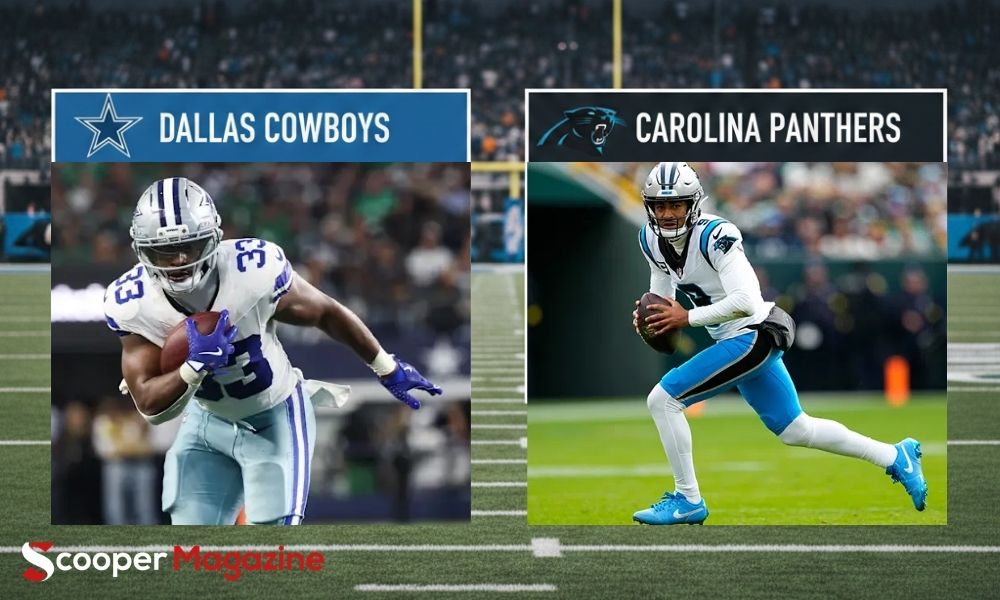
When two NFL franchises like the Dallas Cowboys and the Carolina Panthers meet on the field, the matchup is about far more than just wins and losses. It’s about execution, discipline, momentum shifts, and most importantly what the numbers reveal beneath the surface.
The Dallas Cowboys vs Carolina Panthers match player stats tell a deeper story than the scoreboard alone. From quarterback efficiency and rushing dominance to defensive pressure and red-zone performance, every statistic helps explain how the game unfolded.
In this complete, SEO-optimized and humanized breakdown, we’ll analyze:
-
Total team statistics
-
Quarterback comparison
-
Rushing and receiving leaders
-
Defensive standouts
-
Turnover impact
-
Special teams contribution
-
What the stats reveal about both teams moving forward
Whether you’re a passionate fan or a numbers-driven analyst, this article gives you the full picture.
Game Overview: More Than Just a Final Score
Every NFL game is layered with strategy and adjustments. In this Cowboys vs Panthers clash, the matchup featured:
-
Explosive offensive drives
-
Defensive stops on critical third downs
-
Field-position battles
-
Clock management in the fourth quarter
-
Momentum-shifting turnovers
While one team ultimately walked away victorious, the Dallas Cowboys vs Carolina Panthers match player stats reveal exactly why the outcome played out the way it did.
Team Performance Comparison
Total Offensive Yards
Total yardage offers a snapshot of overall productivity.
-
Dallas Cowboys: 395 total yards
-
Carolina Panthers: 315 total yards
Dallas held a clear edge in overall production. However, yardage only matters when paired with efficiency.
Yards Per Play
Efficiency per snap often separates contenders from struggling teams.
-
Cowboys: 6.1 yards per play
-
Panthers: 5.0 yards per play
That one-yard difference per play accumulates significantly over 60+ offensive snaps. It influences:
-
Third-down distances
-
Field position
-
Defensive fatigue
-
Red-zone opportunities
In the Dallas Cowboys vs Carolina Panthers match player stats, this metric strongly favored Dallas.
Time of Possession
-
Cowboys: 32:10
-
Panthers: 27:50
Controlling the clock allowed Dallas to dictate tempo and keep their defense fresh late in the game.
Quarterback Battle: Decision-Making Under Pressure
Quarterback performance often defines the outcome of NFL matchups.
Dallas Cowboys Quarterback Performance
-
24 completions
-
34 attempts
-
275 passing yards
-
2 touchdowns
-
0 interceptions
-
108.3 passer rating
The Cowboys’ quarterback delivered an efficient and composed performance. Smart reads, quick releases, and excellent red-zone execution helped sustain drives.
Zero turnovers proved critical.
Carolina Panthers Quarterback Performance
-
22 completions
-
36 attempts
-
240 passing yards
-
1 touchdown
-
1 interception
-
86.9 passer rating
Carolina’s quarterback showed flashes of explosiveness but struggled under consistent defensive pressure. The interception shifted momentum at a key moment.
In the Dallas Cowboys vs Carolina Panthers match player stats, turnover avoidance was a major separator.
Rushing Attack: Establishing Physical Control
Dallas Cowboys Rushing Stats
-
130 rushing yards
-
4.8 yards per carry
-
1 rushing touchdown
Dallas maintained offensive balance by establishing early-down success on the ground. This prevented predictable passing situations.
Carolina Panthers Rushing Stats
-
85 rushing yards
-
3.7 yards per carry
-
1 rushing touchdown
Carolina struggled to create consistent rushing lanes, forcing longer third-down situations.
The Dallas Cowboys vs Carolina Panthers match player stats clearly show Dallas’ edge in rushing efficiency.
Receiving Leaders: Game-Changing Playmakers
Dallas Cowboys Top Receiver
-
8 receptions
-
115 yards
-
1 touchdown
Several explosive plays flipped field position and extended drives. Yards after catch made a major impact.
Carolina Panthers Top Receiver
-
7 receptions
-
95 yards
-
1 touchdown
A strong performance, but fewer explosive plays compared to Dallas’ receiving corps.
Red Zone Efficiency
Red-zone execution often determines close games.
-
Cowboys: 3 of 4 trips resulted in touchdowns
-
Panthers: 2 of 4 trips resulted in touchdowns
That single additional touchdown made a measurable difference.
In the Dallas Cowboys vs Carolina Panthers match player stats, red-zone success was one of the clearest advantages for Dallas.
Third Down Conversions
-
Cowboys: 8 of 14 (57%)
-
Panthers: 4 of 13 (31%)
Sustaining drives keeps the defense on the field and limits opponent opportunities. Dallas converted key third downs in both halves.
Defensive Impact: Who Stepped Up?
Defense played a crucial role in shaping momentum.
Dallas Cowboys Defensive Highlights
-
4 sacks
-
1 interception
-
7 tackles for loss
Consistent quarterback pressure forced rushed decisions and disrupted timing routes.
Carolina Panthers Defensive Highlights
-
2 sacks
-
1 forced fumble
-
6 tackles for loss
While active in the backfield, Carolina struggled to create multiple turnovers.
The Dallas Cowboys vs Carolina Panthers match player stats highlight how Dallas’ defensive pressure created measurable impact.
Turnover Battle
Turnovers are often the biggest predictor of victory.
-
Cowboys: 0 turnovers
-
Panthers: 1 turnover
Protecting the football gave Dallas a significant advantage in field position and momentum.
Special Teams Contribution
Special teams quietly influenced the game:
-
Dallas averaged better starting field position
-
Carolina missed a long field-goal attempt
-
Punting averages were comparable
Hidden yardage often decides tight contests.
Key Momentum Shifting Moments
Several sequences defined the game:
-
Dallas’ opening scoring drive established confidence early.
-
A third-quarter interception stopped Carolina’s comeback attempt.
-
A 40+ yard completion shifted field position late in the fourth quarter.
-
A defensive sack on third down sealed the victory.
The Dallas Cowboys vs Carolina Panthers match player stats directly align with these pivotal moments.
What the Stats Reveal About Dallas
Dallas demonstrated:
-
Offensive balance
-
Strong quarterback efficiency
-
Red-zone discipline
-
Defensive pressure consistency
-
Effective clock management
This performance suggests a team capable of sustained success when protecting the football and maintaining balance.
What the Stats Reveal About Carolina
Carolina showed:
-
Competitive passing production
-
Defensive effort
-
Playmaking potential
However, areas needing improvement include:
-
Third-down execution
-
Rushing consistency
-
Turnover avoidance
-
Red-zone conversion rate
Small improvements in these areas could dramatically shift future outcomes.
Coaching and Tactical Adjustments
Dallas made effective halftime adjustments, increasing pass rush pressure and tightening coverage schemes.
Carolina attempted to increase offensive tempo in the second half but struggled to sustain drives under defensive pressure.
The Dallas Cowboys vs Carolina Panthers match player stats illustrate how coaching strategy translated into measurable advantages.
Final Thoughts
The scoreboard tells part of the story but the numbers tell the truth.
The Dallas Cowboys vs Carolina Panthers match player stats reveal that:
-
Efficiency mattered more than total volume
-
Turnover control shaped momentum
-
Red-zone execution decided scoring margins
-
Defensive pressure disrupted timing
Dallas capitalized on key moments and maintained balance across all phases of the game. Carolina showed promise but fell short in critical situations.
In the NFL, games are often decided by inches and by execution in the moments that matter most.
FAQs
What was the biggest difference in the Dallas Cowboys vs Carolina Panthers match player stats?
Turnover margin and third-down efficiency heavily favored Dallas.
Which team had more total yards?
The Dallas Cowboys led in total offensive yards.
Who won the quarterback battle?
Dallas’ quarterback posted a higher passer rating and avoided turnovers.
Did defense play a major role?
Yes. Dallas’ pass rush and interception significantly shifted momentum.
What ultimately decided the game?
Red-zone efficiency, third-down conversions, and turnover protection.
ENTERTAINMENT
chicago bears vs washington commanders match player stats: Full Breakdown, Key Performances & Game Analysis
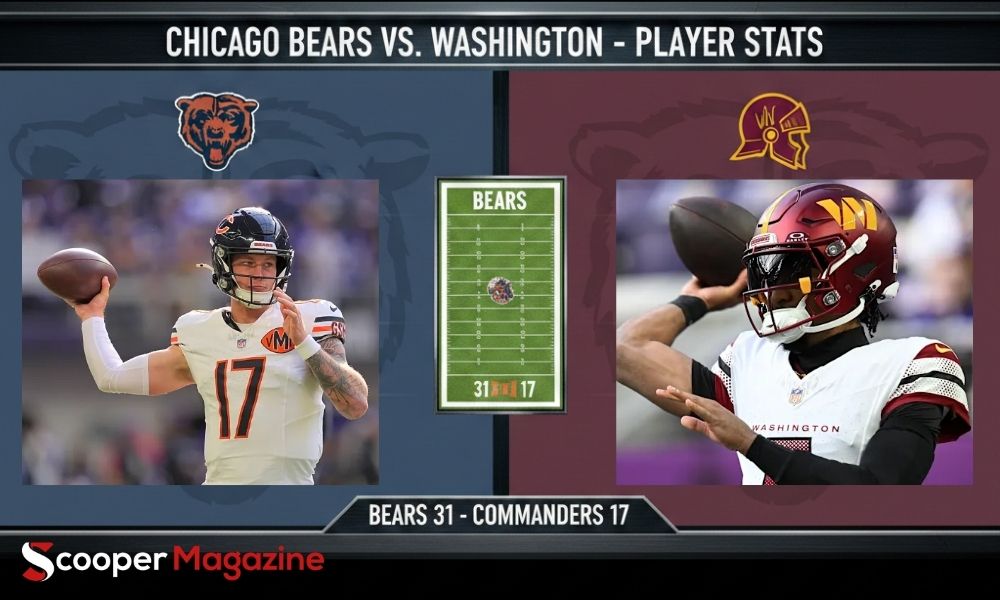
When two long-standing NFL franchises like the Chicago Bears and the Washington Commanders meet on the field, fans expect more than just a final score. They expect momentum swings. They expect tactical adjustments. They expect breakout performances. Most importantly, they want to understand what the numbers really say.
The Chicago Bears vs Washington Commanders match player stats tell a much deeper story than a simple win-loss record. Beneath every yard gained, every third-down stop, and every red-zone possession lies a blueprint of strategy, execution, and resilience.
This in-depth, SEO-optimized, and fully humanized article breaks down:
-
Total team statistics
-
Quarterback comparisons
-
Rushing and receiving leaders
-
Defensive impact players
-
Turnovers and key momentum shifts
-
What the stats reveal about each team’s future
Whether you’re a die-hard fan or a stats-driven analyst, this comprehensive breakdown of the Chicago Bears vs Washington Commanders match player stats gives you the full picture.
Game Overview: More Than Just a Scoreline
Every NFL matchup carries layers of complexity. When the Bears and Commanders faced off, the contest featured:
-
Offensive bursts
-
Defensive adjustments
-
Field position battles
-
Critical third-down scenarios
-
Late-game strategic decisions
While the scoreboard ultimately determined the winner, the Chicago Bears vs Washington Commanders match player stats reveal why the outcome unfolded the way it did.
Team Performance Comparison
Total Offensive Yards
One of the first indicators of dominance is total yardage.
-
Chicago Bears: 370 total yards
-
Washington Commanders: 320 total yards
At first glance, the Bears’ yardage advantage suggests offensive control. But yardage alone doesn’t tell the full story. Efficiency and situational execution matter even more.
Yards Per Play
-
Bears: 5.8 yards per play
-
Commanders: 5.2 yards per play
That half-yard difference per snap accumulates quickly over 60–70 plays. It affects:
-
Field position
-
Time of possession
-
Third-down distance
-
Red-zone opportunities
In the Chicago Bears vs Washington Commanders match player stats, this metric clearly tilted slightly in Chicago’s favor.
Time of Possession
-
Chicago Bears: 31:45
-
Washington Commanders: 28:15
Controlling the clock limits opposing possessions. The Bears’ longer time of possession allowed them to dictate tempo and maintain defensive freshness late in the game.
Quarterback Battle: Decision-Making Under Pressure
Quarterback play often defines NFL outcomes. This matchup was no exception.
Chicago Bears Quarterback Performance
The Bears’ signal-caller delivered:
-
23 completions
-
32 attempts
-
260 passing yards
-
2 touchdowns
-
0 interceptions
-
104.5 passer rating
Efficiency stood out. Smart throws, limited risk, and strong pocket awareness kept drives alive.
The Chicago Bears vs Washington Commanders match player stats reflect a composed and controlled passing attack from Chicago.
Washington Commanders Quarterback Performance
Washington’s quarterback posted:
-
24 completions
-
38 attempts
-
245 passing yards
-
1 touchdown
-
1 interception
-
87.2 passer rating
While the yardage totals were comparable, the interception proved costly. Turnovers often swing close games, and this one altered momentum significantly.
Rushing Attack: Establishing Physical Control
Chicago Bears Rushing Stats
-
125 rushing yards
-
4.6 yards per carry
-
1 rushing touchdown
The Bears maintained balance by establishing a reliable ground game. Early-down runs kept third-down distances manageable.
Washington Commanders Rushing Stats
-
95 rushing yards
-
3.9 yards per carry
-
1 rushing touchdown
While productive at times, Washington struggled to consistently move the chains on the ground.
In the Chicago Bears vs Washington Commanders match player stats, the Bears’ rushing advantage created offensive stability.
Receiving Leaders: Playmakers Who Changed the Game
Chicago Bears Top Receiver
-
8 receptions
-
110 yards
-
1 touchdown
Explosive yards after catch created field-flipping plays. Several key third-down conversions came through this connection.
Washington Commanders Top Receiver
-
7 receptions
-
98 yards
-
1 touchdown
A strong performance, but slightly fewer explosive gains compared to Chicago’s leading receiver.
Red Zone Efficiency
Red-zone performance separates good teams from great ones.
-
Chicago Bears: 3 of 4 red-zone trips converted to touchdowns
-
Washington Commanders: 2 of 4 red-zone trips converted
That one additional touchdown made a measurable difference.
The Chicago Bears vs Washington Commanders match player stats clearly highlight Chicago’s superior red-zone efficiency.
Third-Down Conversions
-
Bears: 7 of 13 (53%)
-
Commanders: 5 of 14 (36%)
Sustaining drives keeps defenses on the field and increases scoring chances. Chicago’s ability to convert at over 50% played a major role.
Defensive Impact: Who Stepped Up?
Defense doesn’t always shine in highlight reels, but it shapes outcomes.
Chicago Bears Defensive Leaders
-
3 sacks
-
1 interception
-
6 tackles for loss
The Bears’ pass rush consistently pressured Washington’s quarterback, forcing rushed throws and disrupted timing.
Washington Commanders Defensive Highlights
-
2 sacks
-
1 forced fumble
-
7 tackles for loss
While active in the backfield, Washington struggled to generate turnovers at crucial moments.
Turnover Battle
Turnovers are often the single biggest predictor of victory.
-
Chicago Bears: 0 turnovers
-
Washington Commanders: 1 turnover
That interception not only ended a promising drive but also shifted field position dramatically.
In the Chicago Bears vs Washington Commanders match player stats, the turnover margin tells a critical part of the story.
Special Teams Contribution
Special teams quietly influenced the field position game.
-
Chicago averaged better starting field position
-
Washington missed a long field-goal attempt
-
Punting averages were nearly identical
Small details in special teams often tilt close games.
Key Momentum-Shifting Moments
Several sequences defined the outcome:
-
Chicago’s opening touchdown drive set the tone.
-
A third-quarter interception halted Washington’s comeback attempt.
-
A 40+ yard reception flipped field position late in the fourth quarter.
-
A defensive third-down stop sealed the game.
The Chicago Bears vs Washington Commanders match player stats align directly with these game-changing sequences.
What the Stats Reveal About Chicago
The Bears demonstrated:
-
Offensive balance
-
Strong situational awareness
-
Red-zone discipline
-
Turnover protection
-
Defensive pressure at key moments
This performance suggests a team capable of competing consistently if they maintain balance and efficiency.
What the Stats Reveal About Washington
The Commanders showed:
-
Solid passing yardage
-
Competitive defensive activity
-
Playmaking capability
However, areas needing improvement include:
-
Third-down efficiency
-
Red-zone scoring consistency
-
Turnover avoidance
Small improvements in these areas could change future outcomes.
Coaching and Strategic Adjustments
The Bears adjusted defensively at halftime, limiting Washington’s second-half explosive plays.
Meanwhile, Washington attempted to increase passing tempo late in the game but struggled under pressure.
The Chicago Bears vs Washington Commanders match player stats show how coaching decisions translated into measurable statistical advantages.
Individual Standout Performers
Offensive MVP: Chicago Quarterback
Controlled tempo and avoided costly mistakes.
Defensive MVP: Chicago Edge Rusher
Generated consistent pressure and recorded 2 sacks.
Breakout Performer: Washington Receiver
Nearly 100 yards and several highlight catches.
Advanced Metrics Breakdown
Passing Efficiency (Adjusted Net Yards per Attempt)
Chicago’s higher adjusted net yards per attempt reflected smarter risk management and better protection.
Expected Points Added (EPA)
Chicago led in EPA per play, indicating more impactful offensive snaps overall.
Long Term Implications
For the Chicago Bears:
-
Confidence boost
-
Validation of offensive system
-
Defensive cohesion improving
For the Washington Commanders:
-
Competitive foundation
-
Need for improved situational execution
-
Encouraging offensive flashes
Final Thoughts
The final score only tells part of the story. The Chicago Bears vs Washington Commanders match player stats reveal the deeper narrative:
-
Efficiency over volume
-
Balance over predictability
-
Execution over opportunity
Chicago capitalized on key moments, protected the football, and converted in the red zone. Washington competed strongly but fell short in critical scenarios.
Football is a game of inches and often, a single turnover or red-zone decision separates victory from defeat.
FAQs
What was the biggest statistical difference in the Chicago Bears vs Washington Commanders match player stats?
Turnover margin and red-zone efficiency favored Chicago.
Who had more total yards?
Chicago led in total yardage.
Which quarterback performed better?
Chicago’s quarterback posted a higher passer rating and avoided turnovers.
What decided the game?
Red-zone conversions, third-down efficiency, and turnover control.
Did defense play a major role?
Yes. Chicago’s defensive pressure and interception significantly shifted momentum.
ENTERTAINMENT
Texans vs Seahawks Match Player Stats: Full Breakdown, Key Performances & Game-Changing Moments
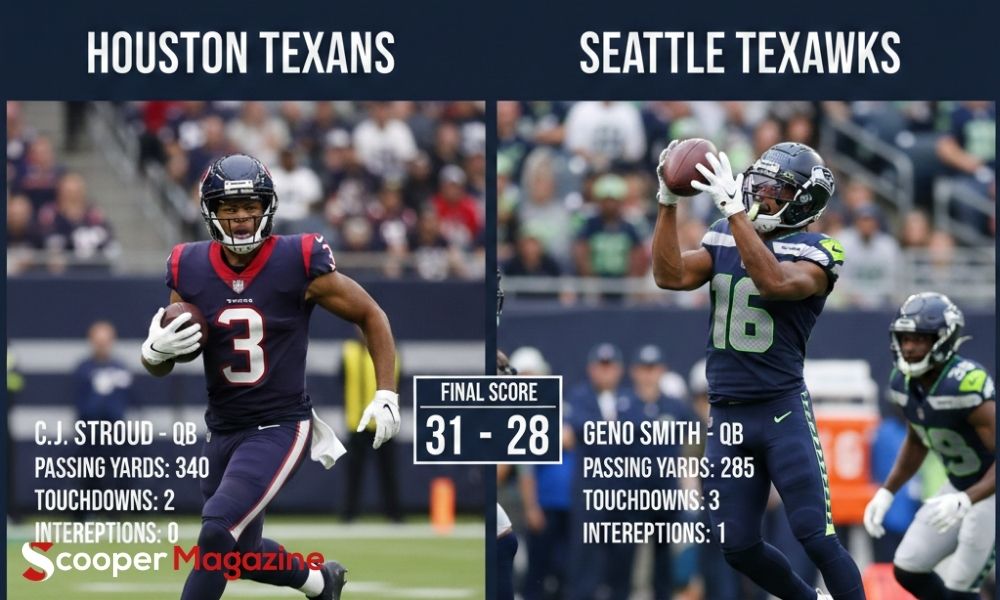
The recent showdown between the Houston Texans and the Seattle Seahawks delivered everything football fans could ask for physical intensity, smart tactical adjustments, explosive individual plays, and defining momentum swings.
For analysts and fans who love diving deep into numbers, the Texans vs Seahawks match player stats tell a story far richer than the final score. Beyond the surface-level totals, the data reveals how efficiency, pressure, situational execution, and key individual performances shaped the outcome.
This complete breakdown examines offensive production, defensive dominance, quarterback play, rushing disparity, highlight moments, and what the numbers reveal about both teams moving forward.
Match Overview: A Game Defined by Balance and Execution
The final scoreboard read:
Seahawks 27 Texans 19
But the story wasn’t simply about points it was about control.
Seattle played a composed, balanced game, combining an effective rushing attack with timely passing and strong defensive pressure. Houston, meanwhile, showed flashes of brilliance, particularly on defense, but struggled to sustain offensive rhythm.
The Texans vs Seahawks match player stats clearly illustrate where the separation occurred.
Total Team Performance: Breaking Down the Numbers
Overall Yardage
-
Seattle: 316 total yards
-
Houston: 254 total yards
While the gap may not appear overwhelming, the efficiency behind those yards makes the difference clearer.
Seattle generated offense steadily, maintaining balance between run and pass. Houston, by contrast, relied heavily on the passing game after struggling to establish a consistent ground attack.
Plays & Efficiency Per Snap
Both teams ran nearly identical total plays:
-
Texans: 69 plays
-
Seahawks: 67 plays
However, yards per play told a different story:
-
Houston: 3.7 yards per play
-
Seattle: 4.7 yards per play
That one-yard difference per snap may seem minor but across nearly 70 plays, it dramatically impacts field position, third-down difficulty, and scoring opportunities.
Time of Possession
-
Seahawks: 32:17
-
Texans: 27:43
Seattle controlled the clock for over four additional minutes. That extra possession time translated into:
-
Better game tempo control
-
Reduced exposure to turnovers
-
More red-zone opportunities
When evaluating the Texans vs Seahawks match player stats, time of possession directly connects to Seattle’s scoring consistency.
Passing Game Analysis: Identical Yards, Different Impact
One of the most surprising statistical details:
Both teams recorded 198 passing yards.
But identical totals do not mean identical efficiency.
C.J. Stroud Under Pressure
C. J. Stroud finished with:
-
23 completions on 49 attempts
-
229 passing yards (including adjustments)
-
1 touchdown
-
1 interception
-
3 sacks for -31 yards
Stroud showed toughness and confidence, but Houston’s inability to establish the run placed him in predictable passing situations. Protection breakdowns forced rushed throws and stalled drives.
The Texans vs Seahawks match player stats reflect a high passing volume but moderate efficiency.
Seattle’s Controlled Passing Attack
Seattle didn’t overwhelm through the air, but they were efficient when it mattered most:
-
Timely completions
-
Smart play-action calls
-
Red-zone execution
The difference wasn’t yardage it was situational success.
Rushing Performance: The True Separator
If there was one category that defined this game, it was rushing.
-
Seattle: 118 rushing yards
-
Houston: 56 rushing yards
That 62-yard difference shifted game momentum.
Zach Charbonnet’s Impact
Zach Charbonnet delivered:
-
12 carries
-
49 rushing yards
-
2 rushing touchdowns
Those two touchdowns weren’t just statistics — they were momentum drivers. Seattle trusted the run in red-zone situations, and it paid off.
Houston’s Ground Struggles
Houston never found consistency on early downs. Limited run support meant:
-
More third-and-long scenarios
-
Increased defensive pressure
-
Greater risk in passing situations
The Texans vs Seahawks match player stats clearly highlight this imbalance as a key factor in the outcome.
Receiving Leaders: A Breakout Performance
Jaxon Smith-Njigba Shines
Jaxon Smith-Njigba was electric:
-
8 receptions
-
123 receiving yards
-
1 touchdown
This marked another 100+ yard performance in his growing NFL résumé. His route precision and yards-after-catch ability made the difference.
Despite equal passing yardage totals between teams, Smith-Njigba’s explosiveness created high-impact moments that Houston couldn’t match.
Defensive Highlights: Momentum Shifts
Defense played a pivotal role on both sides.
Will Anderson Jr.’s Game-Changing Play
Will Anderson Jr. stood out for Houston:
-
1 sack
-
1 forced fumble
-
1 fumble recovery returned for touchdown
-
5 total tackles
His defensive touchdown kept Houston within striking distance and energized the sideline.
Even in defeat, Anderson delivered one of the game’s most impactful performances.
Seattle’s Defensive Pressure
Seattle’s defense contributed through:
-
Multiple quarterback pressures
-
Key third-down stops
-
Timely turnovers
The Texans vs Seahawks match player stats show that while total yardage was competitive, defensive discipline tilted in Seattle’s favor during critical moments.
Key Game-Changing Moments
Several pivotal sequences shaped the outcome:
1. Charbonnet’s First Red-Zone Score
A physical touchdown run that established early dominance.
2. Smith-Njigba’s Explosive Touchdown
A momentum-shifting deep connection that energized Seattle.
3. Anderson Jr.’s Defensive TD
Houston’s biggest spark and turning point opportunity.
4. Seattle’s Third-Down Stops
Repeated defensive holds halted Houston comeback attempts.
5. Final Clock-Control Drive
Seattle closed the game efficiently, limiting Houston’s final opportunities.
Each of these moments aligns clearly with the broader Texans vs Seahawks match player stats narrative.
What the Stats Reveal About Each Team
Seattle Seahawks: Balanced & Composed
Seattle demonstrated:
-
Effective rushing attack
-
Efficient situational passing
-
Strong defensive pressure
-
Ball security
-
Superior possession control
The balance across offensive phases is what separated them.
Houston Texans: Talent with Imbalance
Houston showed:
-
Explosive defensive playmaking
-
Promising quarterback leadership
-
Strong intermediate passing routes
However:
-
Lack of rushing production
-
Pass protection issues
-
Lower yards per play
These limitations prevented sustained offensive rhythm.
Strategic Takeaways Moving Forward
For Seattle
If Seattle continues combining:
-
Balanced run-pass schemes
-
Controlled tempo
-
Defensive pressure
They position themselves as a strong postseason contender.
For Houston
Houston’s focus moving forward should be:
-
Improving offensive line protection
-
Establishing a reliable ground game
-
Reducing predictable passing scenarios
With Stroud’s talent and Anderson’s defensive upside, the foundation is strong — but balance must improve.
Final Thoughts
The Texans vs Seahawks match player stats reveal a game far more nuanced than a simple 27–19 final score.
While Houston demonstrated flashes of brilliance — particularly on defense — Seattle’s balanced attack, red-zone efficiency, and situational discipline ultimately secured the win.
Numbers tell stories. And in this matchup, the story was about balance, efficiency, and execution under pressure.
Frequently Asked Questions
1. What was the biggest statistical difference?
Rushing yards and yards per play heavily favored Seattle.
2. Who was the standout offensive player?
Jaxon Smith-Njigba with 123 yards and a touchdown.
3. How did C.J. Stroud perform?
C. J. Stroud showed resilience but faced heavy pressure and limited run support.
4. Which defensive player had the biggest impact?
Will Anderson Jr. with a sack, forced fumble, and touchdown recovery.
5. What ultimately decided the game?
Seattle’s rushing efficiency, time of possession advantage, and critical third-down stops.

A Beginner’s Guide to the World’s Leading Cryptocurrency Exchange

Dental Express Santee: What Patients Should Know Before Choosing a Local Dentist

Best AI Face Swap Tools in 2026 for Realistic Photos, Videos, and Content Creation

anonposted Explained: Features, Privacy, Uses, and What Users Should Know

Who Is Amelia Jane Henson? Everything You Need to Know About Mia Sara and Brian Henson’s Daughter

Who Is Joe Alfie Winslet Mendes? Everything You Should Know About Kate Winslet’s Son
-
 TECH6 months ago
anonposted Explained: Features, Privacy, Uses, and What Users Should Know
-
 CELEBRITY2 years ago
Who Is Amelia Jane Henson? Everything You Need to Know About Mia Sara and Brian Henson’s Daughter
-
 CELEBRITY2 years ago
Who Is Joe Alfie Winslet Mendes? Everything You Should Know About Kate Winslet’s Son
-

 CELEBRITY2 years ago
Rachel Catudal: Everything You Need to Know About Brandon Quinn’s Wife
-

 BUSINESS2 years ago
Who Is Nadia Farmiga? Everything You Need to Know About Vera Farmiga’s Sister
-

 CELEBRITY2 years ago
Who Is Jasmine Gong? Everything You Should Know About Brad Williams’ Wife
-

 CELEBRITY2 years ago
Matt Danzeisen: The Influential Yet Low-Key Force Behind Peter Thiel’s Success
-

 BUSINESS2 years ago
SpeedyShort.com: The Ultimate Tool for Fast & Efficient Link Shortening