
LIFE STYLE
Why lake texoma should be capitalized — Exploring Grammar, Geography, and the Beauty of Texas’ Great Lake

 lake texoma should be capitalized In the world of grammar and travel writing alike, names matter. And one name that frequently stirs both curiosity and confusion is Lake Texoma. Some people ask, “Should Lake Texoma be capitalized?” The short and definitive answer is yes — Lake Texoma should be capitalized because it’s a proper noun, referring to a specific and iconic body of water that straddles the Texas–Oklahoma border.
But beyond grammar, Lake Texoma represents more than just letters on a map. It’s a symbol of adventure, natural beauty, and the cultural intersection of two states that share a love of lakeside life.
In this deep dive, we’ll explore:
-
Why Lake Texoma should be capitalized grammatically
-
The history and importance of Lake Texoma
-
What makes it one of the most visited lakes in the U.S.
-
The best things to do, where to stay, and why it deserves respect — both in writing and in experience
Part 1: The Grammar Side — Why “Lake Texoma” Should Be Capitalized
Let’s start with the language side of things. From an English grammar perspective, “Lake Texoma” should always be capitalized because:
-
It’s a Proper Noun
Proper nouns refer to specific people, places, or things — names that identify something unique. Just like “Mount Everest” or “Grand Canyon,” Lake Texoma is the specific name of a lake, not a generic term.Incorrect: I went swimming at lake texoma.
Correct: I went swimming at Lake Texoma. -
Capitalization Honors Uniqueness
When you capitalize the words in Lake Texoma, you acknowledge that it’s not just any lake — it’s a unique geographical feature recognized across two states. -
AP Style and Chicago Manual Agreement
Major style guides such as the Associated Press (AP) and Chicago Manual of Style explicitly require capitalization of proper geographical names. According to AP, “Capitalize common nouns such as ‘river,’ ‘mountain,’ and ‘lake’ when they are part of a proper name.”So, Lake Texoma should be capitalized in every context — whether you’re writing a blog post, a travel guide, or an academic paper.
-
Respect and Recognition
Beyond the grammar rules, capitalizing Lake Texoma shows respect for a landmark that’s been a part of American geography since the 1940s.
Part 2: The History of Lake Texoma
A Man-Made Wonder
Lake Texoma is one of the largest reservoirs in the United States. It was created in 1944, following the completion of the Denison Dam on the Red River. The U.S. Army Corps of Engineers built the dam to control floods, generate hydroelectric power, and create a water supply — but the result was far beyond practical use: it became one of the most beloved recreational lakes in the region.
A Name Rooted in Two States
The name “Texoma” itself is a blend of Texas and Oklahoma, reflecting the lake’s position across both states. Hence, “Lake Texoma” isn’t a descriptive term — it’s a distinct title, another reason it must be capitalized.
The combination of names also symbolizes unity and cooperation. Both states share management responsibilities, tourism, and a mutual appreciation for this stunning freshwater gem.
Part 3: Geography and Facts About Lake Texoma
Here are some quick facts that every visitor and writer should know — and which prove why Lake Texoma deserves capitalization and recognition:
| Category | Fact |
|---|---|
| Location | On the Texas–Oklahoma border, primarily fed by the Red and Washita Rivers |
| Creation Year | 1944 |
| Surface Area | Approximately 89,000 acres |
| Shoreline Length | Over 580 miles |
| Dam Name | Denison Dam |
| Purpose | Flood control, hydroelectric power, water storage, recreation |
| Visitors per Year | Over 6 million |
| Nicknames | “Playground of the Southwest,” “Texoma Paradise” |
The size and impact of Lake Texoma make it one of the largest reservoirs in the U.S., and certainly one of the most popular in the south-central region.
Part 4: Why Lake Texoma Is So Popular
If you’ve ever visited, you know that Lake Texoma is more than just a scenic view. It’s an outdoor playground offering endless activities:
1. Fishing Heaven
Lake Texoma is legendary for striped bass fishing — one of the few inland lakes where these ocean-born fish naturally reproduce. Anglers travel from across the country to cast their lines here.
2. Boating and Sailing
Because of its vast size, Lake Texoma supports everything from kayaking to luxury yachting. Several marinas, including Grandpappy Point and Cedar Mills, offer rentals, slips, and sailing events.
3. Camping and Hiking
The surrounding state parks — Eisenhower State Park (TX) and Lake Texoma State Park (OK) — feature miles of hiking trails, campgrounds, and picnic areas. For those who prefer glamping, cabin rentals with lake views are widely available.
4. Wildlife and Birdwatching
Lake Texoma’s ecosystem supports over 300 species of birds, making it a prime location for birdwatchers. You’ll find bald eagles in winter, herons in summer, and vibrant wildflowers framing the shorelines in spring.
5. Beaches and Swimming
Unlike many inland lakes, Lake Texoma features sandy beaches perfect for family outings and summer picnics. Popular swimming spots include Eisenhower Beach and Juniper Point.
Part 5: Tourism and Economic Impact
Lake Texoma contributes massively to local economies in both Texas and Oklahoma. With millions of annual visitors, it drives business to:
-
Hotels, cabins, and campgrounds
-
Local restaurants and marinas
-
Fishing and boat rental companies
-
Real estate markets around Pottsboro, Denison, and Kingston
The U.S. Army Corps of Engineers estimates that the lake contributes hundreds of millions of dollars annually to regional tourism and recreation.
This economic influence further reinforces why Lake Texoma should be capitalized — not just grammatically, but metaphorically — because it’s a central pillar of local pride and prosperity.
Part 6: Grammar Meets Geography — A Lesson Worth Noting
The phrase “Lake Texoma should be capitalized” isn’t only about grammar—it’s about acknowledging importance. When you capitalize the name of a geographical landmark, you’re recognizing its individuality.
Compare:
-
“the lake near the Texas-Oklahoma border” (generic)
-
“Lake Texoma” (specific and meaningful)
Proper capitalization draws attention to history, identity, and cultural context — transforming ordinary writing into something respectful and accurate.
Part 7: Fun Facts About Lake Texoma
-
Two States, One Lake
The Red River forms the boundary, so part of Lake Texoma lies in Texas, and part in Oklahoma — you can literally swim from one state to another. -
Denison Dam Is a Marvel
When it was built, Denison Dam was the largest rolled-earth dam in the world. -
Hidden Underwater Towns
Beneath the lake’s surface lie remnants of old settlements, submerged when the dam was created. -
Celebrity Visitors
Lake Texoma has hosted countless celebrities and sports stars over the years, particularly during fishing tournaments. -
A Boater’s Paradise
With over 580 miles of shoreline, it’s larger than many coastal bays — a reason the U.S. Coast Guard maintains an active presence there.
Part 8: Respecting Nature and Names
When we say “Lake Texoma should be capitalized,” we’re also promoting respect — both for grammar and for the environment. Capitalizing a place name reminds us that this isn’t just a random lake; it’s a vital part of the regional ecosystem that needs preservation.
Tourism brings joy, but also responsibility:
-
Dispose of waste properly.
-
Respect wildlife habitats.
-
Follow boating safety regulations.
-
Support local conservation efforts.
By showing respect through language and behavior, visitors contribute to Lake Texoma’s continued beauty and longevity.
Part 9: How to Plan a Trip to Lake Texoma
If you’re inspired to visit this beautiful landmark, here’s how to make the most of your trip:
-
Best Time to Visit: April through October for warm weather activities; winter for fishing and peaceful retreats.
-
Where to Stay: Eisenhower State Park cabins, Catfish Bay Marina, or private Airbnbs around Pottsboro.
-
What to Bring: Fishing gear, sunscreen, water shoes, binoculars, and of course — your camera.
-
Must-See Attractions: Denison Dam, Lake Texoma State Park, Hagerman National Wildlife Refuge.
And remember, whether you’re sharing photos or writing a travel blog, always type it right: Lake Texoma should be capitalized.
Part 10: Conclusion — The Power of Proper Names
In the end, the phrase “Lake Texoma should be capitalized” isn’t just a grammar tip. It’s a reminder of how words shape respect. Every capital letter pays tribute — to geography, to culture, to nature, and to history.
So yes, Lake Texoma should absolutely be capitalized — in your writing and in your imagination. It’s a name that represents two proud states, countless memories, and one breathtaking stretch of water that continues to inspire travelers and locals alike.
FAQ: Lake Texoma Should Be Capitalized
Q1. Should “Lake Texoma” always be capitalized?
Yes. It’s a proper noun referring to a specific lake on the Texas–Oklahoma border.
Q2. Why is Lake Texoma so famous?
For its striped bass fishing, boating, beaches, and stunning state parks.
Q3. How big is Lake Texoma?
It covers nearly 89,000 acres with over 580 miles of shoreline.
Q4. Is Lake Texoma natural or man-made?
It’s man-made, created in 1944 by the Denison Dam.
Q5. What does “Texoma” mean?
It’s a combination of the words “Texas” and “Oklahoma,” reflecting both states’ shared ownership.
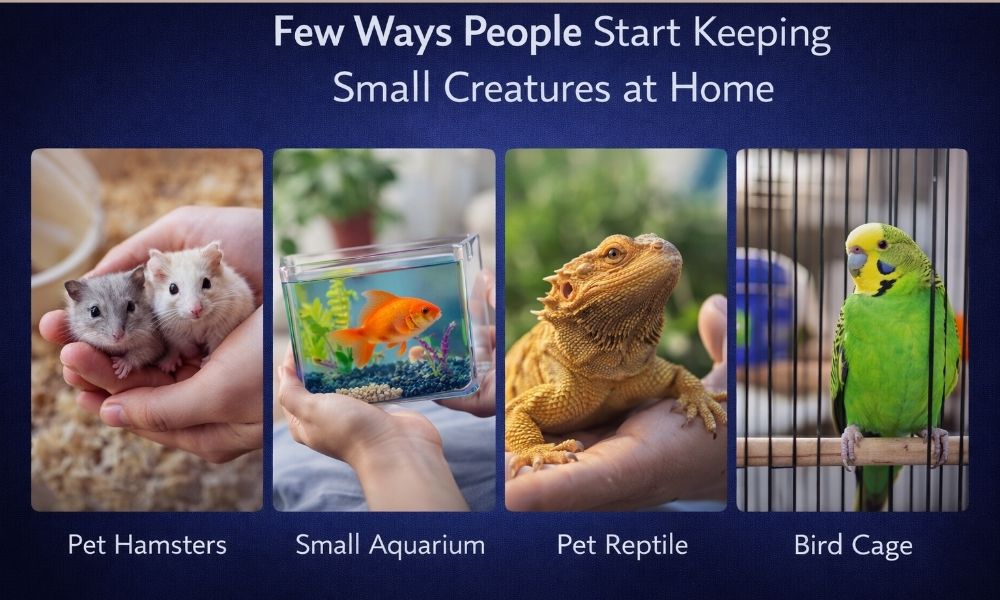
Keeping small pets is not something most people plan from the beginning. It usually starts with a random moment. A video, a photo, or someone talking about it. Then curiosity builds. At some point, people casually check inverts for sale uk options just to see what is available, not even thinking they might actually start.
Getting comfortable with small pet choices
Initially, it is strange. The majority are accustomed to dogs, cats or birds. Little animals are not the same. They do not respond in a similar manner. They do not express love in blatant forms.
That is also what makes them interesting. Thou sees more. You observe minor details. And gradually that indecision begins to dissipate.
Even after purchasing their first one, some of them still feel uncertain. The feeling lingers momentarily.
Why many people prefer low space pets
- Space is one of the biggest reasons people choose them.
- Not everyone has the room or time for larger animals. Small setups fit easily into daily life. A shelf, a table, or even a quiet corner works fine.
- And honestly, once it is set up properly, it does not take much effort to maintain.
- There is also less noise, less movement. For some, that is exactly what they want.
Setting up a small living environment
The setup part is where most people spend time in the beginning.
It does not have to be complicated, but it needs some thought. The basic idea is simple:
- A container that is secure
- Enough airflow
- A base layer like substrate
- A place where the creature can hide
Still, the first setup is rarely perfect. People adjust things later. Sometimes they change everything after a few days.
That trial and error phase is part of it.
How people slowly build interest
- It rarely stays at one.
- People say they will keep just a single one, but then they start comparing. Different sizes, different behaviors.
- And that curiosity grows quietly. No sudden jump. Just small steps.
- Sometimes they even start reading more, watching more, thinking about better setups and that is when things begin to change.
Creating a simple setup that actually works
Setting up a small habitat sounds easy, but small details change everything. Most people begin with a basic container, thinking that is enough. It works for a while, but then they notice small issues. Maybe it feels too dry. Maybe there is not enough airflow. These things are not obvious at first.
So people start adjusting slowly. Adding a better base layer, making small holes for ventilation, placing a hiding spot where the creature feels secure. It is not about making it perfect. It is more about making it comfortable over time.
Once the setup feels stable, everything else becomes easier. Feeding, observing, and even cleaning feels less stressful. It all starts to fall into place without much effort.
How interest grows without people noticing it
At the beginning, it feels like a one time thing. Just trying something new. Nothing serious.
But after a few days, people start checking more often. Just quick looks at first. Then longer observations. They notice movement, small patterns, changes in behavior. It becomes quietly interesting.
And then, without planning it, they start thinking about adding another one. Not urgently. Just a thought.
Sometimes they even tell themselves they will stop at one. But that rarely lasts. The curiosity builds slowly.
Different species, different behaviors, different setups. Each one adds something new to the experience.
It does not feel like a big hobby. It feels small, simple, almost casual. But it stays.
Not perfect, but manageable. And when that happens, many people go back and look at inverts for sale uk again, but this time they are not just browsing. They know what they are looking for. That quiet shift makes a difference. It no longer feels new. Just something they got used to, without really noticing when it happened.

Extra humidity in your home leads to mold growth, structural damage, and bad air quality. A smart dehumidifier prevents all of that automatically.
Program it correctly, and it only runs when needed to reach your desired humidity level every day while saving energy. This guide covers how to automate humidity control from beginning to end.
Why You Should Automate
Manually controlling a dehumidifier is a waste of time. You forget to turn it on when you need it or leave it running way too long after the air is dry. Either scenario wastes energy or shortens the appliance’s lifespan.
With automation, your dehumidifier responds to actual humidity levels in your home. It turns on when needed to lower moisture and automatically shuts off once the air is back to your desired humidity level. You don’t have to think about it.
The Environmental Protection Agency (EPA) recommends running your indoor humidity levels between 30% and 50%. More than 60% is ideal for mold growth. Below 30% and your air is too dry. Itchy skin and sinus irritation are common at low humidity levels. Automation helps maintain that ideal range.
Equipment Needed
Ensure you have the proper equipment before getting started. Every setup varies slightly, but you will need:
- Smart dehumidifier connected to Wi-Fi OR standalone dehumidifier plugged into smart plug
- Separate humidity sensor (optional but useful if monitoring a large room)
- Smartphone app compatible with your devices
- Wi-Fi router connected to 2.4 GHz (not 5 GHz)
Step 1 – Connect to Your App
The first step is downloading the app that controls your smart dehumidifier. Many smart dehumidifiers are compatible with Android phones and iPhones.
Launch the app on your phone and create an account if you do not have one already. Once that is complete:
- Hold the UP and DOWN buttons simultaneously for 3-5 seconds until you hear a beep. On most models, this puts your dehumidifier into pairing mode. You will know it’s working when the Wi-Fi button starts flashing.
- Open your smart dehumidifier’s app and look for an option that says, “Add Device.”
- Pick your home’s Wi-Fi network from the list. Connect to the 2.4GHz network, not 5GHz.
- Allow the app to complete its setup. You should see a confirmation that the device connected.
If it doesn’t connect, unplug your dehumidifier and try again. Also, keep your phone close to your wireless router while pairing. Consider purchasing a Wi-Fi extender if you plan to use this device in your basement or another room with spotty Wi-Fi. Smart homes rely on this connection.
Step 2 – Select Your Humidity Preference
Once you pair your device, set your desired humidity level. This is the ideal room humidity percentage your system will maintain.
EPA guidelines say between 45% and 50% is ideal for most homes. Basements hold more moisture than other rooms, so keep it around 45%. Set bedrooms and living areas a little lower or higher at 40-55% for best comfort.
Look for a setting in your app that says, “Humidity Target,” “Set Point,” or “Dryness Level”. Input your desired humidity level and save. Your system will now work towards maintaining this level automatically.
The Heater Shop from the UK noted that advanced dehumidifiers like the AC Infinity Hydrone even have artificial intelligence (AI) mode. It studies humidity trends over time and automatically adjusts its settings to prevent humidity from spiking. AI mode is beneficial if your space has rapidly changing moisture levels.
Step 3 – Adjust Your Humidity Triggers
We mentioned triggers help determine when your device should turn itself on and off. Most apps allow you to set upper and lower thresholds.
Set your device to activate when humidity exceeds 60% but turn off once it hits 45%. That gives your dehumidifier a range of 15 points to maintain before turning off. If the points are too close together, your dehumidifier turns on and off too frequently. It wastes energy and stresses the fan.
This range between turning on and off is called hysteresis. Ideal hysteresis range is between 5-10%. Too low, and your device turns on/off too frequently. Too high and the humidity will swing more than you want.
Home Assistant users can skip app configuration and input these details yourself. Using your home’s humidity sensor data, you can configure a component called “generic hygrostat.” It allows you to set your own humidity high and low triggers.
Step 4 – Create a Running Schedule
Triggers cover sudden rises in humidity. Scheduling your device for optimal run times saves you even more money. Your system can’t run when it’s not allowed to, even if the humidity is too high.
Your dehumidifier probably doesn’t need to run at night. Unless you live in a very humid climate, humidity increases when you shower, cook, or during the hotter afternoon hours. Set your system to run anytime during these periods and stay off when you don’t need it.
Locate “Schedule” or “Timer” in your app. Set available run times in 30-minute or 1-hour increments. We recommend leaving it available from morning to night. For example, from 7 AM – 10 PM. You can adjust it as needed later if your device runs too frequently or not enough. Outside of those times, your device will stay off no matter how humid it gets.
Step 5 – Configure Smart Home Integrations
Both Alexa and Google Home allow you to create routines. These are customized commands that control smart devices using one command. You can tell Alexa to “turn on dehumidifier” or include it in your goodnight routine that runs when you tell your smart home you’re going to bed.
IFTTT (“If This Then That”) is another excellent service to look into. If you connect your dehumidifier using IFTTT, you can tie its actions to other apps you use. Set your dehumidifier to turn on if your weather app detects high humidity levels in your area.
Step 6 – Observe and Refine
Wait one week then analyze results. Review your app’s history logs to see when and how often your device ran. If it’s too much, increase your trigger point. If humidity is still getting too high, lower your humidity target level.
You can usually view usage logs, energy consumption, and filter change reminders through your app as well. Review these monthly to ensure everything is functioning correctly.
If your device offers the ability, turn on notifications for when the water tank becomes full. The dehumidifier automatically powers off if it fills. When you are away from home, that could cause humidity to spike until you return and notice. Get a notification when your tank is full and empty it right away.
Automatic Humidity Control Done Right
Setting up your smart dehumidifier should not take more than 30 minutes. After you connect it to your smartphone and enter your preferred humidity levels, automating the rest is easy. Add triggers and a schedule before connecting it to your smart home system. Your house stays dry, your humidity stays consistent, and you save money all year long.
Humidity Case Study: Helping our Customers Keep Their Homes Humidity-Controlled
CLIENT: 4-bedroom house in the suburbs
ISSUE: Constant damp basement and stuffy bedrooms cause mold, mildew smells, and poor sleep.
HOW WE FIXED IT:
- Installed Wi-Fi smart dehumidifiers with humidity sensors in basement, bedrooms, and utility room
- Programmed desired humidity range between 40–50% with auto-on alerts at >55%
- Installed fans to move air throughout rooms for quicker drying
- Paired dehumidifiers with HEPA air purifiers for air quality and odor control
WHAT WE DID:
Equipped basement rooms and laundry rooms with 50-pint LGR dehumidifiers, meant for more damp/cooler areas
Installed silent or quiet mode 30-pint dehumidifiers with a night mode option in bedrooms
Controlled humidity levels remotely with smartphone app integration. Automated run times & received alerts when each dehumidifier’s tank was full.
WHAT HAPPENED:
- Within 72 hours, home’s humidity was maintained between desired levels
- Mold and mildew were eliminated from recurring problem areas
- Our client’s allergies were greatly reduced (especially dust mites)
- Smart controls allowed homeowners to decrease energy consumption by not over-running units.
Moral of the story: Running your dehumidifier with maximized airflow and consistently monitoring humidity levels allows for quicker drying times and better air quality with less hands-on time.
Study: https://ijrpr.com/uploads/V5ISSUE2/IJRPR22481.pdf
Dehumidifier FAQs
What is the ideal home humidity level I should keep?
We recommend 40–50% relative humidity. Lower humidity will eliminate mold & dust mites. Higher humidity keeps your home comfortable while limiting other allergens like pollen.
Will a dehumidifier help with my allergies?
Absolutely. Dehumidifiers keep humidity levels low to prevent dust mites and decrease mold spores which are known to trigger asthma and allergy symptoms. Try pairing your dehumidifier with an air purifier with a HEPA filter!
Do I need a smart dehumidifier?
A regular model will suffice for small spaces with moderate humidity. Smart dehumidifiers can be programmed for hands-off control and are best used for larger areas, whole-home systems, or rooms with extreme changes in humidity. Smart dehumidifiers also conserve energy by limiting run time.
How do I know what size dehumidifier to buy?
It depends on how large the space is and how much humidity you wish to remove.
Humidity is HIGH:
- Small rooms – 30-pint dehumidifier
- Large bedrooms or basement – 50-pint dehumidifier or higher
- Whole-home or commercial use – 70 – 200+ pints
Humidity is Moderate:
- Stick with a 30-pint dehumidifier.
Can I leave my dehumidifier on all day?
If your dehumidifier has a built-in humidistat or can be programmed smartly, then you can! A humidistat will allow the dehumidifier to sense when it reaches your desired humidity level and shut off to prevent your home from drying out too much. Running your unit continuously will also increase energy costs.
Where should I place my dehumidifier?
Dehumidifiers should always be at least 12″ from walls/furniture. You can place your dehumidifier in the center of a damp room or close to the area that is most affected by humidity. If you have a large room with multiple areas being affected by humidity, we suggest purchasing more than one dehumidifier or placing a fan in the room to allow for better circulation.
Is it necessary to clean my dehumidifier?
Yes. Regularly empty the water tank or drain if necessary. Most units have disposable filters, so clean those every 2 weeks. Lastly, you’ll want to wipe down the coils once a year to prevent mold or bacteria from growing inside your dehumidifier.
Should I run my dehumidifier year-round?
Yes! Dehumidifiers are great for helping you remove excess moisture in the hot & humid months. But did you know that many LGR or desiccant dehumidifiers can run during cooler months as well?

Most people do not consider the issue of dealing with used needles until the time when they have to. This article describes how virginia sharps disposal is done in practice particularly by individuals taking care of patients at home or in small clinics.
Sharps waste consists of objects that can cut the skin. That is easy to say, and in reality, human beings tend to procrastinate or avoid addressing it. And there the little dangers creep in.
What Sharps Really Means In Daily Life
Sharps in simple terms are those that cut or pierce. But when you see them every day, they become normal.
Some of the typical cases that people have to deal with:
- Needles of insulin daily.
- Blood sugar testing lancets.
- Post-medication injection syringes.
- Minor medical blades in certain instances.
It may not look like much. Just one or two items a day. However, they accumulate in the long run.
Why People Should Not Ignore Proper Disposal
People simply take a needle and dispose of it sometimes. It feels quick and done.
However, there is where the issue begins. It may appear covered but may still be harmful. A person who will later deal with waste may not even see it.
And, and the truth is, the majority of people do not consider that far. It is not necessarily the matter of carelessness. It is simply something that they are not accustomed to.
The Everyday Reality At Home
Home care has changed a lot. A lot of the treatments that used to be done at the hospital are now done in the bedroom or the kitchen.
Thus people find themselves operating on things such as:
- Daily injections
- Blood testing routines
- Long term medication use
And responsibility comes with it. Not heavy, but still there.
It seems to me sometimes like an addition to an already full day. And that is most likely the reason why people postpone it.
Containers That Actually Make Life Easier
This is a section that is neglected. Human beings attempt to utilize what is in their proximity.
Plastic bottles, used boxes, even bags.
It works for a short time. But not always safe.
This is the reason why proper sharps containers are created. They are not easily broken and can be closed up. That in itself mitigates a great deal of risk.
And when you begin to use one it really is easier. No second guessing.
Small Mistakes That Happen Without Notice
They do not always get it right. And that is okay.
But these are things that occur more frequently than one thinks:
- Over stuffing the container.
- Leaving needles uncapped
- Leaving unsealed prior to disposal.
- Storing containers in open spaces.
None of them seem big mistakes. However, when combined they can cause unsafe situations.
Where People Usually Get Stuck
The greatest misunderstanding is not on storing sharps. It is about what to do next.
Where do you take it
Who accepts it
The frequency of disposition should be how often.
These are the questions that remain in the mind. And occasionally individuals simply hold on to the container than they ought.
Not because they want to. Just because they are unsure.
Making It Part Of Routine Without Thinking Too Much
When it becomes a routine, then it ceases to be effort.
To help, a few easy habits will be:
- Store the container near sharps usage.
- Dispose of material right after use.
- Inquire about local disposal every now and then.
Do not wait till the jar is full.
And with time it is automatic. Nearly as any other day ritual.
Sharp management is an easy task, but it is not an easy task either. It sits somewhere in between.
Some days you may forget. There are days when you can do it perfectly. That is normal.
Nevertheless, in the case of the virginia sharps disposal, a little bit of consciousness and caution helps.
A Few Quick Questions That Come Up Often
Can I reuse a sharps container?
Usually no. The majority of them are single use and safe sealing.
Is it okay to store it for a long time?
Not really. Disposing of it when it is full is better.
Do small homes really need proper disposal?
Yes, even little things count.
What if I miss one or two steps?
It happens. Simply attempt to remain steady in the future.

A Beginner’s Guide to the World’s Leading Cryptocurrency Exchange

Dental Express Santee: What Patients Should Know Before Choosing a Local Dentist

Best AI Face Swap Tools in 2026 for Realistic Photos, Videos, and Content Creation

anonposted Explained: Features, Privacy, Uses, and What Users Should Know

Who Is Amelia Jane Henson? Everything You Need to Know About Mia Sara and Brian Henson’s Daughter

Who Is Joe Alfie Winslet Mendes? Everything You Should Know About Kate Winslet’s Son
-
 TECH7 months ago
anonposted Explained: Features, Privacy, Uses, and What Users Should Know
-
 CELEBRITY2 years ago
Who Is Amelia Jane Henson? Everything You Need to Know About Mia Sara and Brian Henson’s Daughter
-
 CELEBRITY2 years ago
Who Is Joe Alfie Winslet Mendes? Everything You Should Know About Kate Winslet’s Son
-

 CELEBRITY2 years ago
Rachel Catudal: Everything You Need to Know About Brandon Quinn’s Wife
-

 BUSINESS2 years ago
Who Is Nadia Farmiga? Everything You Need to Know About Vera Farmiga’s Sister
-

 CELEBRITY2 years ago
Who Is Jasmine Gong? Everything You Should Know About Brad Williams’ Wife
-

 CELEBRITY2 years ago
Matt Danzeisen: The Influential Yet Low-Key Force Behind Peter Thiel’s Success
-

 BUSINESS2 years ago
SpeedyShort.com: The Ultimate Tool for Fast & Efficient Link Shortening